Form 01
Kibon Il-Jang
The purpose of the Kibon forms is to show the development of basic techniques and show understanding of block and strike preparation, balance, and focus. Kibon Il-jang is the simplest of all the Poomsaes.

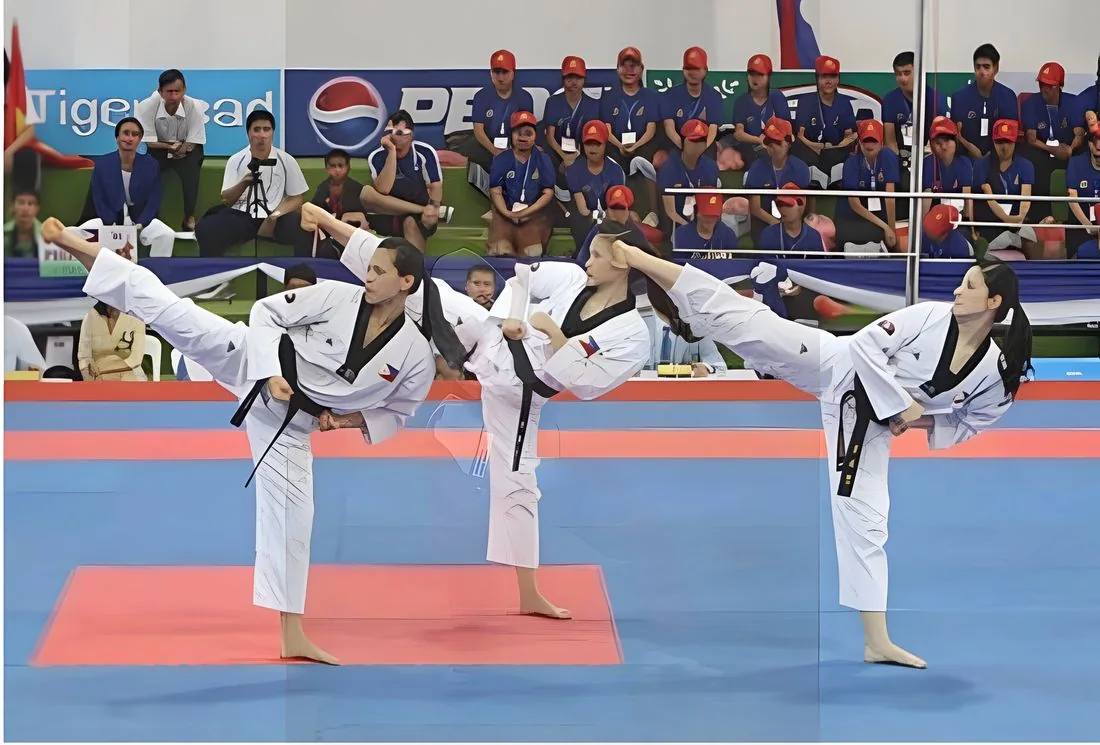
Eight Poomsae to learn for Kup grades and a further nine for Dan grades — a required technical element for every martial art grading.
A Poomsae is a series of fundamental movements, mainly defense and attack, set in a logical sequence to deal with one or more imaginary opponents. Poomsae are an indication of a student's progress, a barometer in evaluating an individual's technique.
Poomsae are practiced to improve Taekwondo techniques. When practicing, students develop flexibility of movement, master body shifting, improve sparring technique, balance and breath control. Poomsae enable students to acquire techniques which cannot be obtained from other forms of training.
As you progress through the Kup grade (coloured belts) and Dan grade (black belt) system you will generally learn one new Poomsae for each belt level. There are eight Poomsae to learn for Kup grades and a further nine Poomsae to learn for Dan grades.
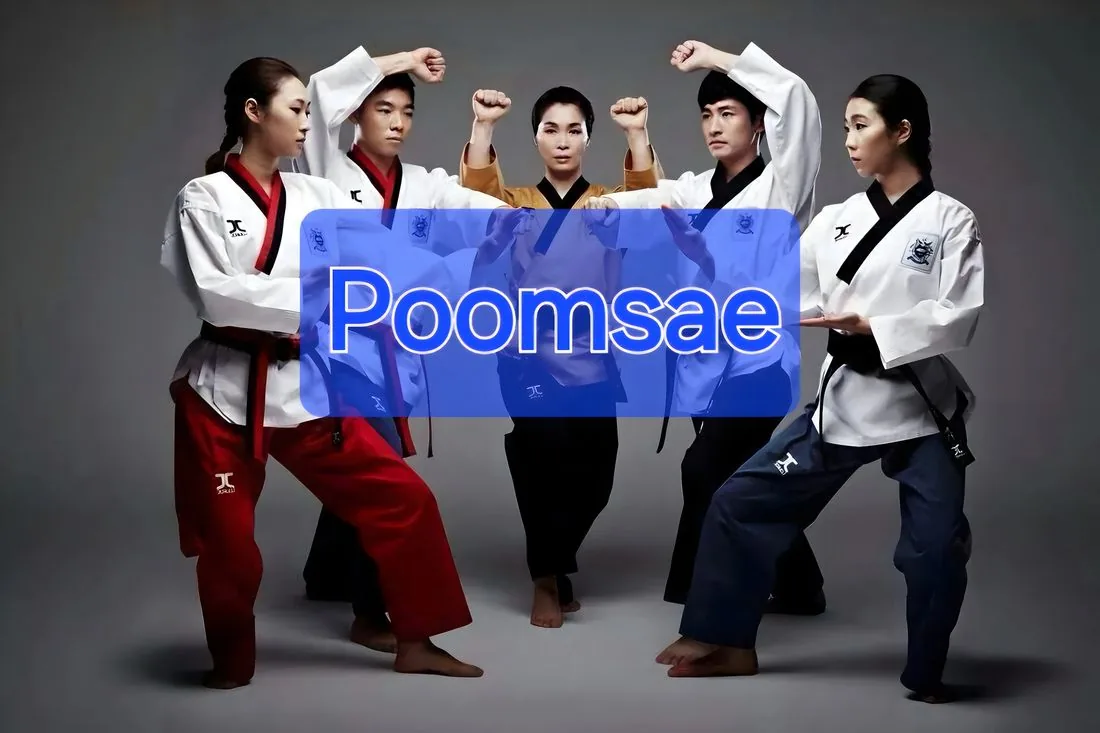
Play any card to watch a demonstration from the Kukkiwon World Taekwondo Headquarters education playlist.
The purpose of the Kibon forms is to show the development of basic techniques and show understanding of block and strike preparation, balance, and focus. Kibon Il-jang is the simplest of all the Poomsaes.
Represents heaven (keon) and the beginning of things — light and rain come from the heavens and nurture growth — and end: death, place in heaven, rebirth.
Represents "joyfulness" (Tae) and is meant to represent strength underneath the appearance of gentleness. Moves should be performed gently (slowly) but with force.
Represents fire, sun, and heat. The moves should be performed with "snap" and passion, combination moves following quickly from the previous technique.
Represents thunder, the object of fear and trepidation as a youth. The techniques should be performed with force and with a cadence slightly slower than the previous forms.
Represents the wind. Like the wind, techniques change from quick and fast to heavier and more powerful. The turns are performed quickly to represent the twisting movements of a tornado.
Represents water and its formlessness and adaptability. Techniques are performed fluidly, showing twisting techniques to adapt to the lines of attack and defense.
Represents the mountain. The techniques are tighter and closer — for example tiger stance — and performed with strength and power, snapping into place with force and control.
The final Taegeuk form symbolizes the earth as source of life. Combining swift and slower, more powerful techniques, with two kihap in the pattern, each on the jumping technique.
Koryo is the name of a significant dynasty in Korea associated with invention, cultural advancement and strong defense. Performed with poise and balance. The initial Poomsae performed by a 1st Degree Black Belt to test for 2nd Degree.
금강 (geumgang) means diamond — symbolising hardness, that which is too strong to be broken. This form must express the spiritual strength necessary to cut through all distractions presented by life. Performed by a 2nd Degree Black Belt to test for 3rd Degree.
태백 (Taebaek), "bright mountain", is a mountain in Korean mythology from where Dan-gun Wanggeom is thought to have ruled the nation. Since this mountain reaches to the sun, Taebaek must be performed with the agility of light. Performed by a 3rd Degree Black Belt to test for 4th Degree.
The same forms performed in competitive style by junior and senior athletes.
Two Junior athletes demonstrating Taegeuk 1 in competitive style.
Taegeuk 2 demonstrated in a competition by a junior athlete.
Taegeuk 3 demonstrated in a competition by a junior athlete.
Practitioners doing Taegeuk 4 in the recent World Taekwondo Poomsae Championships.
Taegeuk 5 demonstrated in a competition by a junior athlete.
Taegeuk 6 demonstrated in competitive style by two junior athletes in a competition.
Taegeuk 7 demonstrated in a competition by a junior athlete.
Taegeuk 8 demonstrated in a competition by a junior athlete.
Two Senior athletes demonstrating Koryo in competitive style.
Two Senior athletes demonstrating Keumgang in competitive style.
Two Senior athletes demonstrating Taebaek in competitive style.